If 2024 was the year of the Chatbot, and 2025 was the year of Multimodal AI, then 2026 is undeniably the year of the Agent. We've moved from asking AI questions to assigning AI jobs.
But this shift to "Agentic AI"—where autonomous systems plan, reason, and execute workflows without human intervention—has exposed a massive crack in our digital foundation: the Cloud wasn't built for this.
The New Bottleneck: Time-to-Power
In previous cloud eras, the constraint was often bandwidth or storage. Today, it is literally electricity.
As outlined in our analysis of why 2026 is the year of agentic AI, an agent doesn't just "ping" a server once. It engages in a continuous loop of reasoning, tool use, and verification. This sustained compute load is melting traditional data center power budgets.
The industry calls this metric "Time-to-Power"—the time it takes to connect waiting server racks to the energy grid. In major hubs like Northern Virginia and Dublin, this timeline has stretched to 3-5 years.
Enter Cloud 3.0: Sovereign & Hybrid
This energy crisis is birthing Cloud 3.0. Unlike the centralized monoliths of Cloud 1.0 (AWS/Azure dominance), Cloud 3.0 is distributed, hybrid, and often sovereign.
We are seeing a massive repatriation of workloads. Companies are moving inference models to local edge devices to save on cloud costs and reduce latency.
The Rise of the "Micro-Cloud"
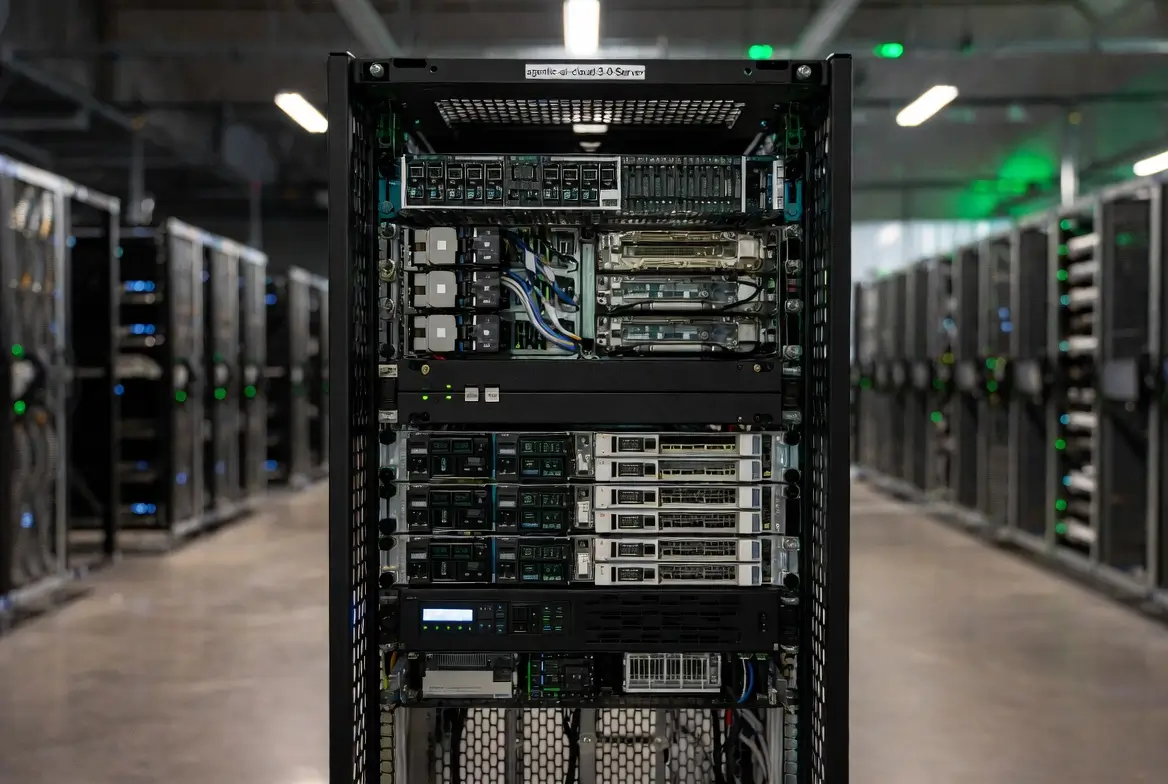
Instead of sending every agentic thought to a hyperscale data center, we are seeing the rise of Micro-Clouds—small, specialized server clusters located closer to the energy source (e.g., near hydroelectric dams or solar farms) rather than the user.
This architectural shift is critical for platforms building complex scientific workspaces or real-time robotics control systems.
What This Means for Developers
building for Agentic AI requires a new mindset. You can't just assume infinite scale anymore. Optimization is back in vogue.
- Orchestration: Managing multiple agents requires new frameworks (like LangGraph or AutoGen).
- Cost Management: An infinite loop in an agent script can bankrupt a startup in minutes.
- Edge Inference: Learning to run SLMs (Small Language Models) on user devices is now a required skill.
The cloud isn't dying, but it is mutating. And if your infrastructure strategy is still stuck in 2024, your agents are already obsolete.

HapticFeed Team
Editorial Board
The collective voice of HapticFeed. A distributed group of engineers, designers, and researchers dedicated to tracking the pulse of tomorrow's technology. We write about what matters, not just what's trending.